By: Michelle Pies, DO
Throughout my medical training and career, I had never envisioned a time when I would see so much human suffering and have so little means to help. Then, the COVID pandemic came. I was a full-time hospitalist and the Inpatient Medical Director. I was not prepared to handle the degree of loss that was coming, nor the overwhelming sense of failure when I could not help my patients. The internal turmoil was boiling over, and the helplessness was nearly unbearable.
I distinctly remember the first person I cared for with COVID pneumonia. He was in his late 70s and had bright, light blue eyes. In caring for him daily, it was not hard to see how alone he felt due to the visitor restrictions in place. I watched him struggling to breathe and lose his appetite. His eyes were like windows to the hypoxia-induced panic he was stoically trying to conceal. I tried to remain optimistic for us both. I listened to him talk about family, personal interests and plans for life post-hospitalization. The holiday season was rapidly approaching, and he was finally improving. I was excited to call his spouse and tell her he had finally turned a corner. She was even more thrilled to hear the news. Then suddenly, after two weeks of fighting to breathe and suffering in isolation away from everything that held meaning to him, he suddenly desaturated, was moved to the ICU and placed on a ventilator. He died on December 25, 2020. In my mind, I can still hear his wife sobbing as we spoke for the last time.
Shortly after my blue-eyed patient died, more inpatients suffered similarly and by now, my heart was heavy as I silently carried each loss with me. I wondered, how could I have spent so many years in medical training and not be able to help them? How could I spend all these hours reading every report, update, and historical recount of similar viruses and still not know how to help them? At no point in my medical education had anyone taught me how to handle feelings of helplessness. Nonetheless, I had to keep pushing forward because more patients were waiting.
Later in the pandemic, vaccines became available. I volunteered at the hospital’s vaccine clinic. I worked endlessly to create computer order sets and hospital workflows. I attempted to educate and update the staff. I offered a supportive ear to others feeling burned out and exhausted. Moral injury and emotional exhaustion were commonplace. Despite feeling similar, I had to continue contributing because I needed to find a way to negate the losses I was feeling and fill the hole in my heart.
The weeks turned into months and people were still dying. There were not enough hospital beds or ventilators to meet the drastically growing need. I attended morning phone meetings to review hospital bed availability throughout the state. Our resources were dwindling, and the hospital was quickly running out of available ventilators. This led to the agonizing task of deciding what criteria would determine who ventilators would be allocated to. At this point, I am overwhelmed and deeply conflicted. I begin to again ask myself, when did it become a physician’s role to decide who receives potentially life-saving treatment? I never learned how to make these types of decisions and frankly, I did not want to. Regardless, the severely ill kept coming.
Hospital staff, resources, and equipment were not the only issues; We were also running out of personal protective equipment (PPE). Prior to COVID, N-95 masks were single-use, but due to the global PPE shortage, these protective masks were rationed, one mask per week per person. Determined nothing could stand in the way of helping others, I prayed Scotch tape would securely seal my N-95 to my face after the straps broke. It seemed like there was no other option and I had to keep helping those before me. The vibrant erythematous lines on my face, where the tape had been, were minimal in comparison to physical and emotional exhaustion burning inside me.
Now we are out of hospital rooms and trying to fit two people into each of the single occupancy ICU rooms. One evening, at the end of my shift, I admitted a married couple in their 80s. They were both critically ill with acute hypoxic respiratory failure due to COVID pneumonia. At this point in the pandemic, we were routinely asking all admitted patients for their COVID vaccination status, not as a judgement, but as an aid in predicting the disease course. This couple was not vaccinated. At baseline, she was relatively healthy, and he had a history of Parkinson's. They shared an ICU room with the hospital beds side-by-side. I rounded on them daily. On hospital day 2, despite every treatment available, she laid in her bed, working hard to breathe and agonizingly watched as her husband struggled until he exhaled for the last time. The next afternoon, when I checked on her, I could see through the glass doors; she was visibly grieving. Even though I was feeling completely empty having worked well beyond full time for months, I felt empathy for her. I put my PPE on, entered the negative pressure room, and pulled up a chair. She had been crying and initially did not make eye contact. I reached for her hand, telling her I was sorry for her loss and how I could not imagine how hard this must be for her. It is here, in this moment, our eyes met. She began to share her story about their life together, how they met, their careers, and children. Then she said, “I wish we would have gotten the vaccine. I knew with his Parkinson's that he would die if he got COVID.” I did not know what to say – what could I say? Then she continued, “Our pastor told us it was the devil’s mark. We trusted our pastor. We did not know.” She is crying so hard she can hardly speak. Now, tears begin to fill my eyes then hit my mask eventually, fogging my PPE shield.
In her vulnerability and grief, she taught me something medical school never did – people are doing the best they can, with the information, resources, and knowledge they have. Through this encounter, I no longer felt empty, helpless, or overwhelmed. She gave me the most valuable gift; her words led to the rebirth of my unconditional compassion for humans and love of medicine. We talked for over one hour that day. Two weeks after she changed my life, I unfortunately pronounced her dead. Her wisdom lives on in my heart today and I am forever grateful to her.
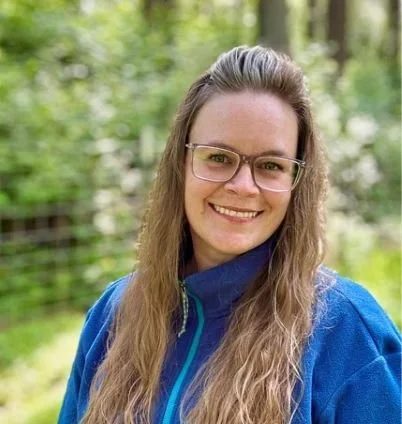
Michelle is an Addiction Medicine Fellow and current hospitalist in Oregon.